ترك رسالة
إذا كانت أنت مهتم بمنتجاتنا وتريد معرفة المزيد من التفاصيل، يرجى ترك رسالة هنا، وسوف نقوم بالرد عليك حالما نحن CAN.
When a stone cutting line starts producing inconsistent pieces, the first reaction is often to change the feed speed or replace the blade. Sometimes that helps. In other cases, the problem comes from the material itself, how the workpiece is supported, or a machine setting that has not been checked carefully.
For a stone fabricator producing thin stone veneer, these problems deserve attention. A small variation in the cutting process can affect the amount of finishing work required after sawing. If the same issue occurs repeatedly, it may also interrupt production while operators inspect the material and adjust the setup.
Before making major changes to a thin stone veneer saw, it is worth checking the process step by step.
This article explains six areas to inspect when stone cutting results are inconsistent, along with practical questions to discuss with your equipment supplier.
Not every cutting problem originates in the machine.
Natural stone can contain variations in hardness, veins, fissures and other geological features. Even pieces from the same block may not behave identically during cutting. The dimensions, condition and stability of the incoming material can also affect the result.
Before changing any machine settings, inspect the stone you are about to process.
Look for visible cracks, uneven surfaces and areas where the material may not sit securely on its support. Compare the problematic pieces with pieces that have already been cut successfully.
If inconsistent results appear only with certain stone pieces, record the material type and the location of the problem. This information helps distinguish material-related variations from issues that occur consistently across different workpieces.
For workshops processing multiple stone types, keeping a record of material batches can make troubleshooting more straightforward.
The saw blade is another important part of the cutting process. A blade that is worn, damaged or unsuitable for the material may contribute to inconsistent cutting results.
However, replacing the blade should not be an automatic response to every cutting defect.
Check the blade condition, mounting arrangement and operating suitability according to the blade and machine manufacturer's instructions. Also confirm that the blade specification matches the stone being processed and the intended cutting operation.
For a thin stone veneer saw, blade selection should take into account more than diameter alone. The stone type, required cutting dimensions, blade design and operating conditions all need to be considered together.
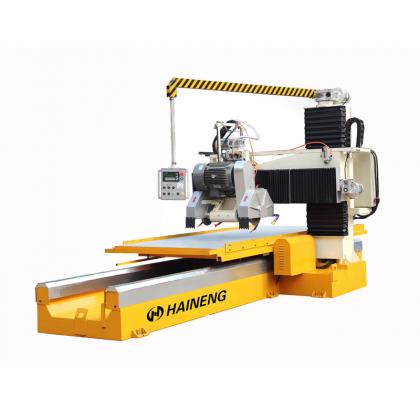
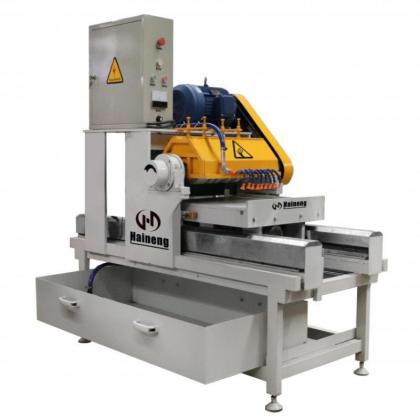
The Haineng ZQ-22/45 single-blade thin stone veneer saw is listed with different blade diameter ranges for its two configurations:
22 kW model: Ø800–1,000 mm.
45 kW model: Ø1,000–1,200 mm.
These are the listed machine configurations, not a guarantee that every blade within each range is suitable for every stone material.
Before ordering replacement blades, provide the supplier with your machine model, existing blade specifications and the type of stone you cut. Confirm compatibility rather than selecting a blade based on diameter alone.
Feed speed is often one of the first settings operators consider when cutting results become inconsistent.
The Haineng ZQ-22/45 single-blade saw lists an adjustable conveyor speed of 600–2,450 mm/min. This allows the feed setting to be adjusted within the specified range.
The important question is not simply how fast the conveyor can run. It is whether the selected speed suits the material, blade and required cutting result.
Increasing feed speed without checking these factors may not solve the original problem. Conversely, using a slower setting does not automatically guarantee a better result.
A more useful approach is to establish a repeatable test procedure.
First, select representative stone material and record the current machine settings. Next, inspect the resulting cuts and document the defects, if any. If an adjustment is necessary, change one variable at a time and compare the results under otherwise similar conditions.
This makes it easier to identify which adjustment actually helped.
Keep in mind that the conveyor speed displayed or specified by the machine is not the same as the amount of finished product produced per hour. Actual production output also depends on loading, unloading, stone dimensions, cutting requirements and downtime.
Water supply should be included in a cutting-process inspection, particularly when the selected cutting method requires water for blade cooling and debris removal.
Check the actual water supply and distribution at the cutting area. Look for interruptions, blockages or inconsistent delivery. Follow the equipment manufacturer's instructions when inspecting water lines and related components.
The ZQ-22/45 quotation lists water consumption of 3 m³/h for the 22 kW single-blade model and 3.5 m³/h for the 45 kW version.
These figures are useful when planning workshop utilities, but they should not be treated as a substitute for confirming the required operating conditions of the actual machine configuration.
If a cutting problem develops after the machine has been running normally, it is worth reviewing whether the water supply has changed. Record when the problem started and whether it occurs throughout the cutting process or only under particular operating conditions.
If the cause remains unclear, consult the machine or blade supplier rather than compensating for a suspected water-delivery problem by making unrelated adjustments.
A workpiece needs to remain properly supported throughout the cutting operation. If the material shifts, rocks or sits unevenly, the resulting cut may not match the intended dimensions.
Before starting production, confirm that the workpiece is positioned and supported according to the machine manufacturer's instructions.
Also check the machine's relevant alignment and setup requirements if the same cutting deviation appears repeatedly. Any inspection of blade alignment, mechanical components or other machine settings should be performed using the prescribed procedure by qualified personnel.
Do not assume that every inconsistent cut requires mechanical adjustment. The material, blade and feed setting should also be reviewed before drawing a conclusion.
One useful troubleshooting step is to compare the results from several representative workpieces. If the deviation repeatedly appears in a similar direction or location, record the pattern and provide it to the technical team.
A clear description of the symptom is more useful than a general statement that the machine is not cutting accurately.
Visual inspection is helpful, but it cannot replace dimensional measurement when the finished product has specific thickness requirements.
Choose suitable measuring tools for the dimensions and tolerances defined for your product. Measure representative pieces at consistent locations and record the results.
For example, a workshop can track:
Incoming stone dimensions and material type.
Target finished thickness.
Blade specification and machine configuration.
Conveyor speed and other relevant operating settings.
Measured finished dimensions.
Visible defects and any adjustments made during the test.
The purpose is not to create unnecessary paperwork. It is to make the cutting process easier to understand and repeat.
If the results improve after a change, retain the relevant settings and measurement records. If the problem continues, these records provide useful evidence when discussing the issue with the equipment supplier.
It is also important to define acceptable finished dimensions before production begins. The maximum cutting depth of a machine is not the same as a guaranteed finished thickness tolerance.
For the ZQ-22/45 single-blade models, the listed maximum cutting depths are 380 mm and 480 mm, respectively. These figures describe the stated cutting capacity, not a promise of a particular finished veneer thickness or dimensional accuracy.
The following table can help operators organize their initial inspection. These are possible checks rather than definitive diagnoses; the correct response depends on the actual symptom and machine configuration.
|
Observed problem |
What to check first |
|---|---|
|
Inconsistent results on different stone pieces |
Material condition, dimensions and support |
|
Cutting quality changes over time |
Blade condition, water supply and operating settings |
|
Results change after a feed-speed adjustment |
Record the setting and compare controlled test cuts |
|
Workpiece appears unstable |
Positioning and support, following the machine manual |
|
Finished thickness does not meet requirements |
Measurement method, machine setup and agreed tolerance |
|
The same deviation continues across test pieces |
Record the pattern and request a technical inspection |
Avoid changing several settings simultaneously. Doing so makes it difficult to determine whether the original problem has been resolved or simply changed into a different one.
Before processing a new batch of stone, take time to confirm the conditions under which the machine will operate.
Start by identifying the stone type, incoming dimensions and required finished thickness. Confirm the compatibility of the selected blade and the relevant machine settings. Inspect the workpiece support, verify the necessary utilities and make sure the operating area is ready.
Next, carry out a controlled test cut using suitable material. Measure the result against the agreed requirements rather than relying only on appearance.
Once the setup has been verified, record the relevant parameters so the operator has a clear reference for subsequent work under comparable conditions.
This process is especially useful when a workshop changes stone types, introduces a new finished dimension or begins using a different blade specification. It gives the production team a more reliable starting point than reusing settings without checking whether the conditions are still the same.
If the cutting results remain inconsistent after the basic checks, avoid making repeated adjustments without a clear diagnosis.
Prepare the information needed for a technical assessment, including the machine model, blade specification, stone type, target dimensions, current settings and photographs of the cutting defects. Measurements from several representative pieces are particularly useful.
A short video showing the cutting process may also help the technical team understand the situation, provided it is recorded safely and in accordance with the equipment manufacturer's instructions.
For an imported stone cutting machine, it is worth confirming the availability of the relevant technical drawings, operating manual and after-sales support before purchase. These resources can make installation, operation and future troubleshooting easier to manage.
Consistent stone cutting starts with the right combination of material preparation, blade selection, operating settings and a properly configured machine.
The Haineng ZQ-22/45 thin stone veneer saw is available in 22 kW and 45 kW single-blade configurations, with different blade diameter ranges and listed maximum cutting depths. The appropriate option depends on the actual workpiece dimensions, cutting requirements and production conditions.
When evaluating a machine for your workshop, do not rely on motor power or maximum cutting depth alone. Discuss the material you process, your target finished dimensions and your daily production requirements with the supplier.
Contact Haineng with your stone type, incoming workpiece dimensions, required finished thickness and current production challenges. These details provide a practical starting point for evaluating the suitable machine configuration and arranging a technical discussion before ordering.
No.7, Jinyuan Road, Wuli Industrial Park, Jinjiang, Quanzhou City, Fujian Province, China
بريد إلكتروني : Anyth@anythmachine.com
هاتف : +8613757603958
هاتف : +8613586156380


حقوق الطبع والنشر © 2013-2026 Quanzhou New Haineng Stone Machinery Co.,Ltd.. جميع الحقوق محفوظة.
 شبكة IPv6 مدعومة
مسح ل WeChat




 English
 français
 Deutsch
 русский
 español
 português
 Türkçe
 Polski
 Indonesia